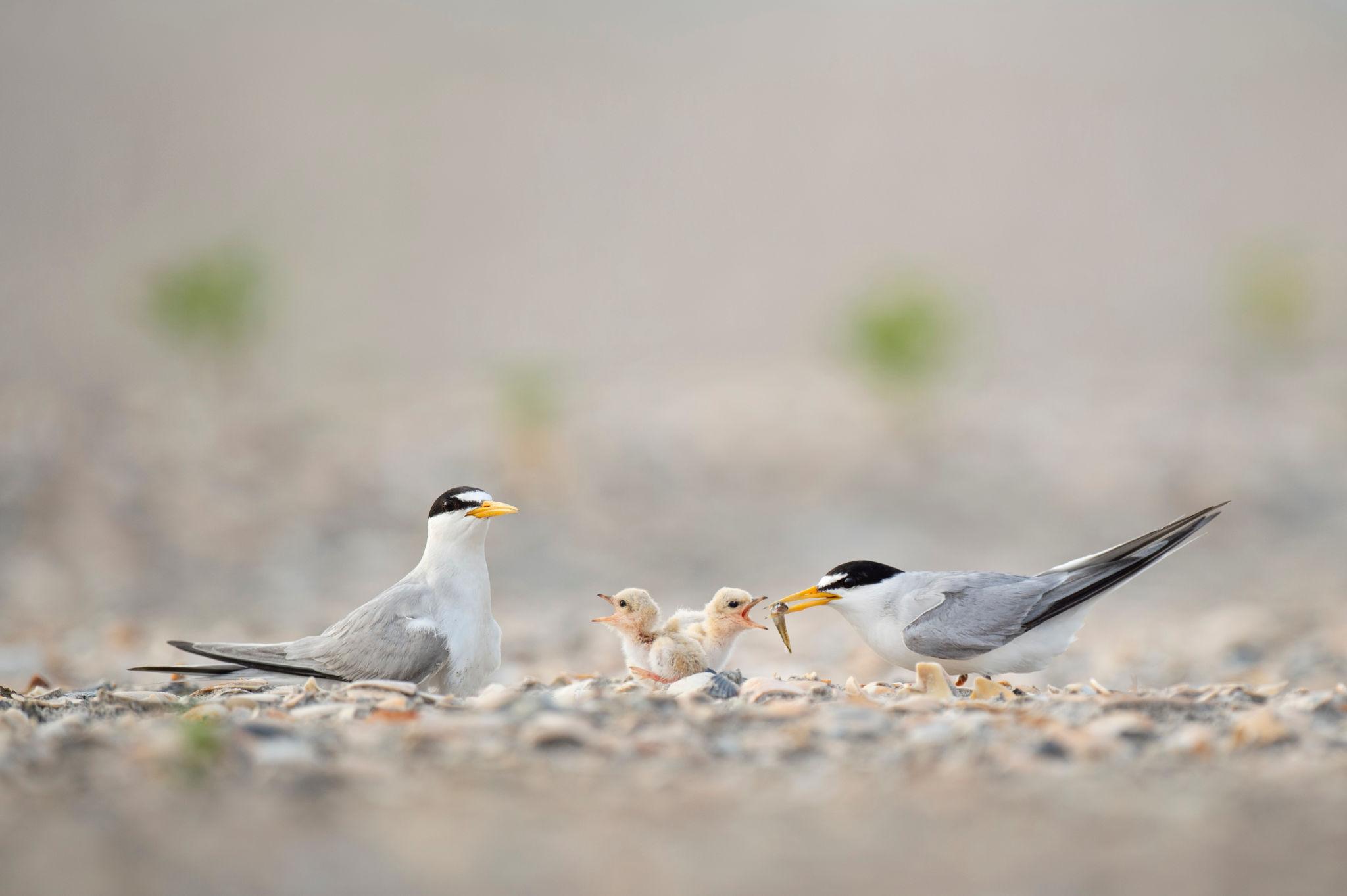
Beach-Nesting Birds
Small Nests, Big Challenges
Least Terns, Black Skimmers, Wilson’s Plovers, Snowy Plovers, and other coastal birds may nest directly on sand or shell. Eggs and chicks can be difficult to see and are vulnerable to disturbance.

Protecting beach-nesting birds through monitoring, education, and responsible recreation.
South Florida’s beaches are nesting habitat for vulnerable shorebirds and seabirds. SFAS volunteers help protect nesting areas, educate beach visitors, and support a culture of shared stewardship on the coast.
Beach-Nesting Birds
Least Terns, Black Skimmers, Wilson’s Plovers, Snowy Plovers, and other coastal birds may nest directly on sand or shell. Eggs and chicks can be difficult to see and are vulnerable to disturbance.
Volunteer Stewardship
Stewards help monitor nesting areas, observe bird behavior, answer questions, and explain why buffers, fencing, and temporary closures matter. The goal is education and awareness—not enforcement.
Observe colonies, nests, adults, and chicks without causing disturbance.
Help beach visitors understand nesting behavior and how to share the beach responsibly.
Support posted buffers and encourage people and pets to give nesting birds space.
Walk around posted nesting areas, keep dogs and other pets away from colonies, avoid flushing resting or nesting birds, and never enter fenced areas for a closer photograph. Small changes in human behavior can greatly reduce disturbance.
SFAS works within a broader statewide network of partners committed to protecting shorebirds and seabirds.
Coastal habitat restoration and bird stewardship reinforce one another. Native dunes create more resilient beach habitat and help support the broader coastal ecosystem.
Training and opportunities vary by nesting season and location.
Primary contact form, suitable for use on the contact template or the footer.